4 Lines – Strike Cut
Overview
The Strike Cut drill develops timing and trust between thrower and cutter on straight downfield cuts.
Unlike the upline drill, the throw is made without power-position momentum, requiring both players to accurately read each other and deliver a flat throw into space.
Aims
- Improve timing between thrower and cutter on strike cuts
- Train throwers to deliver flat, weighted throws into space
- Teach cutters to read release cues, not just commit blindly
- Reinforce patience and communication in downfield continuation
Targeted Core Skills
- Strike cutting
- Deep throw timing
- Throwing to space
- Reading release cues
- Catching in stride
- Field awareness
Setup
- Standard 4-Lines setup:
- 2 central cutting lines
- 2 wide throwing lines (10–15m from cutters)
- One disc starts with a thrower
- The next thrower applies a force toward the sideline
Execution
- The cutter initiates with a straight strike cut downfield.
- The thrower:
- Does not step into power position
- Throws from a stable base
- The throw must:
- Be flat
- Be thrown into space
- Have a slight outside-in angle
- Cutter adjusts stride to the throw and catches in motion.
- Players rotate according to the standard rotation.
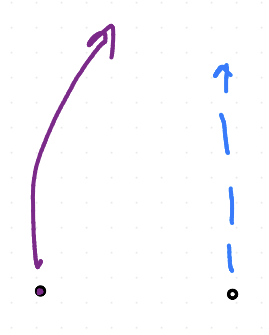
Rotation:
Force → Throw → Furthest Cutting Stack → Throwing Stack you received the disc from
This rotation applies unless explicitly modified by a development.
Emphasis / Coaching Focus
- Thrower reads cutter speed before release
- Cutter reads shoulder turn and release cues
- Thrower does not rush the throw
- Cutter commits to speed changes, not full sprints only
- Prioritise clean timing over maximum distance
Common Mistakes
- Cutter leaving too early or at full speed immediately
- Thrower panicking and forcing the throw
- Throws floated instead of driven
- Inside out throws causing the disc to drift away from the receiver
Developments
Development 1 – Chasing Defender
Objective: Add realism and pressure without changing structure.
- Add a defender starting 2–4m behind the cutter
- Defender chases but does not bid
- Encourages:
- Better speed variation from the cutter
- More decisive release from the thrower
Coaching Emphasis:
- Cutter must change gears
- Thrower must trust space, not panic
Development 2 – Late Release Constraint
Objective: Improve patience and throw quality.
- Thrower must wait until:
- Cutter passes a cone
- Or reaches a visual cue
- Prevents early, rushed releases
Development 3 – Distance Window
Objective: Enforce consistency.
- Throws must land within a defined distance window (e.g. 15–20m)
- Throws outside the window are considered failed reps
Development 4 – Silent Reps
Objective: Improve non-verbal communication.
- No verbal cues allowed
- Forces reliance on:
- Body language
- Timing
- Field awareness
Development 5 – Thrower Led
Objective: Improve throwers ability to weight a disc in the air and for a receiver to read the throwing mechanic of the thrower
The thrower makes their throw whilst the defender is stationary. It needs to be weighted correctly to be right for the receiver.
- Thrower Starts their throwing motion and releases the disc into space.
- Direct cutting angles and disc reading.
Defensive Variations (Optional)
- Defender mirrors first steps, then commits
- No bidding initially
- Focus on pressure and recovery positioning
Progressions / Regressions
Regression:
- Shorten distance
- Remove defender
Progression:
- Increase distance
- Add stall count
- Require specific throw types
Coaching Notes
- This drill is about trust and restraint
- Stop reps early if timing degrades
- Reinforce that “not throwing” can be the correct read
- Quality reps matter more than speed