4 Lines – Upline Cut
Overview
The first drill in the 4-Lines warmup series, focused on timing and execution of the upline cut.
This drill develops coordination between cutter and thrower, reinforcing early recognition, clean footwork, and quick continuation, while keeping repetitions high and rotations tight.
The developments on this 4-Lines series of drills can take this from a quick 30minute pre match warm up to a full training session covering many types of throws.
Aims
- Teach correct upline cutting mechanics
- Improve timing and placement of leading and gutshot passes
- Reinforce early throw vs adapt-and-lead decision-making
- Establish rhythm and tempo for the 4-Lines series
Targeted Core Skills
- Upline cutting
- Reading defender positioning (simulated via force)
- Leading passes
- Gutshot passes
- Break vs around decision-making
- Quick transitions between roles
Setup
- Four lines total:
- 2 central cutting lines
- 2 wide throwing lines, positioned 10–15m from cutters
- One disc starts with a thrower
- The next thrower applies a force toward the sideline
- The opposite throwing line therefore has the opposite force
Execution
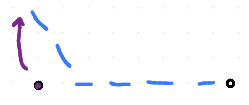
- A cutter initiates movement toward the sideline, covering at least half the distance to the thrower.
- The cutter then plants and cuts upline.
- The thrower delivers one of:
- A short leading pass (inside or around)
- A gutshot pop pass
- Constraints:
- Leading pass must travel no more than 10m forward
- Gutshot must be caught before the cutter reaches the sideline
- After the catch, players rotate according to the standard rotation.
Rotation:
Force → Throw → Furthest Cutting Stack → Throwing Stack you received the disc from
This rotation applies unless explicitly modified by a development.
Emphasis / Coaching Focus
- Cutter commits fully before changing direction
- Thrower reads early around vs adapt-and-lead
- Early around throws must be early enough to abort
- Gutshots must be decisive and flat
- Prioritise rhythm and clean reps over power
Common Mistakes
- Drifting instead of committing toward the sideline
- Throwing the around too late
- Leading passes floated too far downfield
- Gutshots thrown too late, receiver has to wait for the disc.
Developments
Development 1 – Continuation to Deep Cut
Objective: Introduce power-position continuation throws.
- After catching the upline pass:
- Receiver immediately throws downfield to a deep cut
- The deep throw must be:
- Properly timed
- Weighted to avoid over- or under-throwing
- After throwing:
- The thrower becomes the deep cutter
- They return to the middle lane, aligned with where they received the upline pass
Rotation Change:
- Adds an additional cutting line downfield
- Rotation continues after the deep throw
Coaching Emphasis:
- Catch → set feet → throw
- Do not rush the deep throw
- Throw to space, not to the receiver
- Angle the disc Flat-Outside in.
- Cut downfield and adjust when the throw comes
Development 2 - Upline or dump
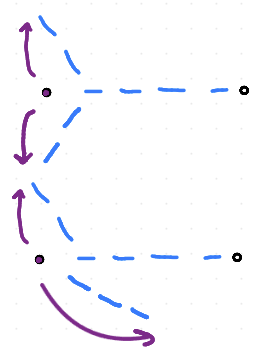
The cut can chose which direction to go, either up the line or back down the line into the dump space, ideally they should try and get away from the line and look infield but just resetting the disc works too.
Development 2 – Inside Shot → Throw & Go
Objective: Layer give-and-go principles into the upline pattern.
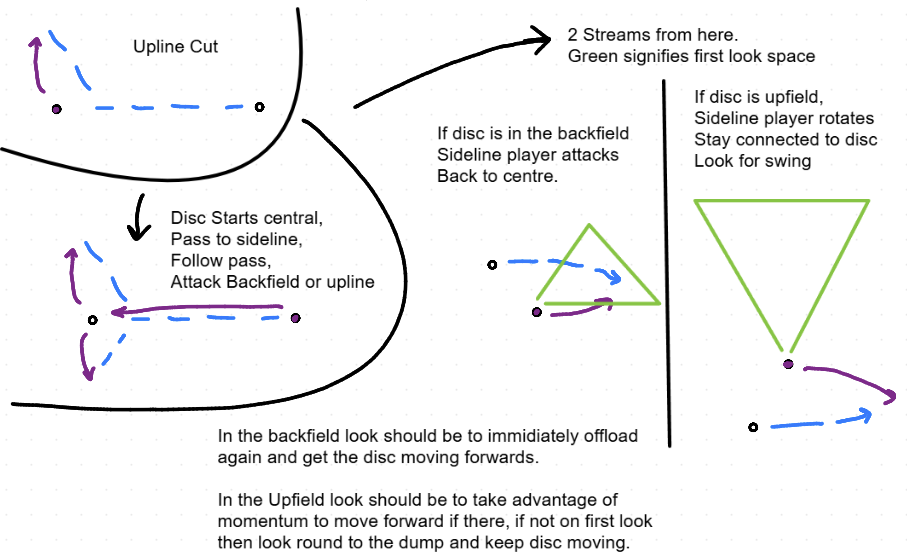
- The initial throw is upline
- This creates a Power Position Channel
- New handler looks upfield first
- The original thrower immediately cuts horizontally
- Receives the disc in the middle of the pitch if the initial continuation isn't there.
- The initial throw is into the backfield:
- Gives a swing opportunity
- New handler is looking to put the disc across the pitch
- Original handler cuts horizontally and receives the disc in stride - Power Position
Coaching Emphasis:
- Throw first, then explode
- Catch-and-release mechanics
- Maintain forward momentum
Development 3 – Paired Defence
Objective: Add realism and speed variation.
Players rotate through the drill in pairs, removes the extra section of the force rotation.
- Encourage:
- Change of speed in the cut
- Stronger commitment before direction change
Notes:
- Can be applied to:
- Base drill
- Development 1
- Development 2
- Defence focuses on positioning, not blocks
- Play the Game Not the Drill.
Defensive Variations (Optional)
- Cutter defender mirrors first movement
- Force defender maintains sideline force
- No bidding initially — pressure and realism only
Progressions / Regressions
Regression:
- Shorter distances
- No force applied
- Allow slower timing
Progression:
- Increase distance
- Add stall counts
- Restrict throw types
Coaching Notes
- This drill defines upline standards for your system
- Call out early vs late decisions explicitly
- High reps matter — keep rotations tight
- Stop briefly if timing degrades